Proof of work vs proof of stake is the debate behind one of the biggest differences between Bitcoin and Ethereum, and understanding proof of work vs proof of stake clears up a lot of confusion about why some cryptocurrencies use massive amounts of energy while others don’t. Here are five essential mistakes to avoid when comparing the two.

This article is for education only and is not financial advice.
Proof of Work vs Proof of Stake: The Basic Idea
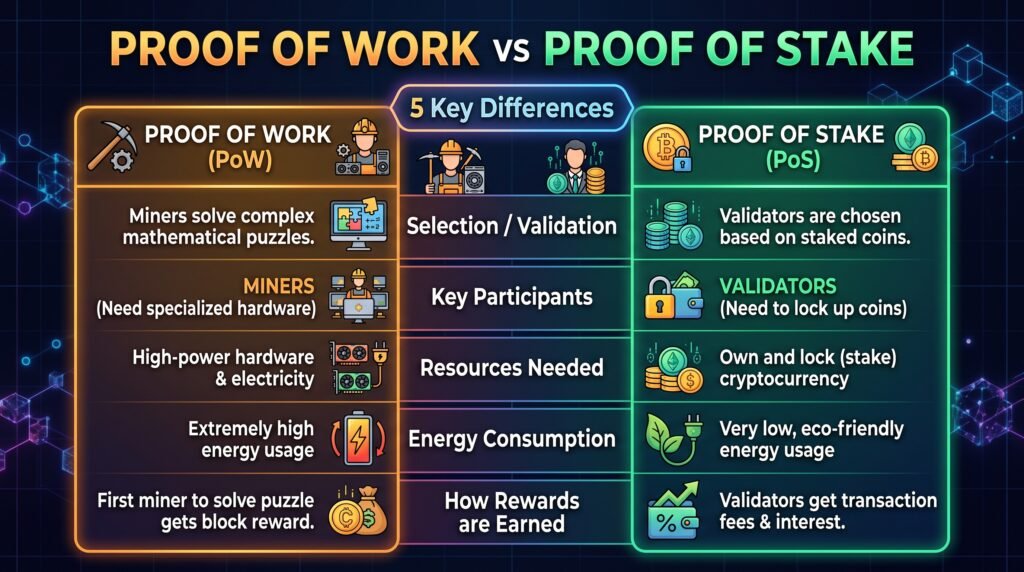
Proof of work is the original consensus mechanism used by Bitcoin. Miners compete to solve a complex mathematical puzzle using specialized hardware, and whoever solves it first gets to add the next block to the blockchain and earns a reward. This competition requires enormous computing power, which is what makes the network secure but also energy-intensive.
Proof of stake works differently. Instead of competing with computing power, participants called validators lock up, or “stake,” their own cryptocurrency as collateral for the chance to be selected to add the next block. Ethereum switched from proof of work to proof of stake in 2022, a change known as “the Merge,” which dramatically cut its energy use. This single switch is the clearest real-world example of proof of work vs proof of stake in action.
Proof of Work vs Proof of Stake: 5 Essential Mistakes to Avoid
1. Assuming energy use is identical across both systems
Proof of work requires continuous, massive computing power running around the clock, which translates into significant real-world electricity use. Proof of stake requires comparatively minimal energy, since validators don’t need specialized mining hardware running constantly, just a staked balance and a connected node. Treating the two as equally energy-intensive is a common mistake when comparing proof of work vs proof of stake.
2. Mixing up how rewards are earned
Miners in a proof of work system earn rewards based on computing power contributed. Validators in a proof of stake system earn rewards roughly proportional to how much they’ve staked, with no specialized hardware race involved.
3. Underestimating hardware requirements
Proof of work mining, especially for Bitcoin, now largely requires specialized machines called ASICs, which are expensive and have driven mining toward large, well-funded operations. Proof of stake validation can run on comparatively modest hardware, lowering the barrier to participation somewhat.
4. Misunderstanding how security is maintained
Proof of work security comes from the sheer cost of acquiring enough computing power to attack the network. Proof of stake security comes from economic risk: a validator who tries to cheat the system can have their staked funds penalized or destroyed, a mechanism called “slashing.”
5. Assuming all major coins use the same system
Bitcoin remains proof of work. Ethereum, along with many newer blockchains, uses proof of stake. Our guide to Bitcoin vs Ethereum covers more of how these two major cryptocurrencies differ beyond just their consensus mechanism.
Does Proof of Work vs Proof of Stake Affect Transaction Fees?
Indirectly, yes. Consensus mechanism isn’t the only factor behind transaction costs, but Ethereum’s move away from proof of work was paired with other upgrades that have helped manage network costs over time. Our guide to crypto gas fees covers what actually drives those costs today.
Can You Earn Passive Income From Either System?
With proof of stake, yes, directly, by staking your own coins, which our guide to crypto staking for beginners explains in detail. With proof of work, participating as a solo miner is largely impractical for individuals today, since it generally requires significant upfront investment in specialized hardware and electricity costs to be competitive.
Frequently Asked Questions
Is proof of stake more secure than proof of work?
Both have proven secure at scale for their respective major networks, but they achieve security through fundamentally different mechanisms, computing cost versus economic penalty, so direct comparisons aren’t always straightforward.
Why hasn’t Bitcoin switched to proof of stake?
Bitcoin’s community has generally prioritized the security track record and decentralization properties of proof of work, and a change of this scale would require broad consensus across the network, which hasn’t materialized.
Do I need to understand proof of work vs proof of stake to invest in crypto?
Not strictly, but it helps explain real differences between major cryptocurrencies, including energy use, earning opportunities like staking, and how each network is secured.
Is proof of stake riskier for investors?
Staking carries its own risks, including potential slashing penalties and lock-up periods that can limit access to funds, which are different from, not necessarily greater than, the risks associated with proof of work mining investments.
Source
Ethereum.org: Proof-of-Stake (PoS)
Disclaimer: This article is for informational purposes only and does not constitute financial advice. Cryptocurrency investments are volatile and carry a risk of total loss. Always do your own research and consider consulting a licensed financial advisor before investing.